The global magazine and marketplace for classic car enthusiasts, by enthusiasts.


Filter
Classic Tucker for sale - Tucker cars for sale
-

1962 Bentley S2 Continental H.J.Mulliner Two Door Sports Saloon. BC87CZ
A fabulous example of a desirable design and configuration of car, originally specified to be painted Circassian blue, and now beautifully finished to a very high standard in a gorgeous shade of very dark, inky blue, which may well be the original colour. Fine red pin striping, superb chrome work, and appealing, original blue leather interior, w.. -
1993 Ferrari Conciso Concept by Michalak | RM Sotheby's | Sealed June
To Be OFFERED AT AUCTION at RM Sothebys' Sealed June event, Bidding Closes 24/25 June 2026. Estimate Available Upon Request A one-off, road legal, concept car built on a Ferrari 328 GTS drivetrain and chassisShown at the 1993 Frankfurt Motor Show and 1994 Geneva Motor ShowDriven by Jay Leno for Jay Leno’s Garage and rec.. -
1998 BMW 840CI E31 M62
Reg: R778CCX Vin: WBAEF820X0CC66950 Mileage: 98000 Vintage and Prestige is proud to offer one of German finest machines; this excellent example of BMW 840ci, presented in Artic Silver Metallic and black leather interior. The BMW 840ci E31 is incredibly stylish & a car with Car.. -
1955 PORSCHE 356 CONTINENTAL (pre A)
1955 PORSCHE 356 CONTINENTAL A true rare collectors item in as new fully restored 100 point condition. In 1955 North American European car importer Max Hoffman persuaded Porsche that cars with a name sold better in North America. He persuaded Porsche to give their 356 model a name, Continental was settled up.. -
1998 Aston Martin V8 Volante LWB Left Hand Drive.
1998 Aston Martin V8 Volante LWB Left Hand Drive. Chassis number: SCFDAM209WBL89023 Registration number: S17VOL A beautiful rare car with less then 8000 miles from new. The current owner acquired this car from the first owner, a good friend from germany who purchased the car brand new in Monaco & use.. -
1963 Porsche 356 B T6 Coupe 1600S
1963 Porsche 356 B T6 Coupe 1600S Registration Number: IG5453 A quite unique opportunity to acquire one, if not the finest example of the iconic 356 in existence today. This car has just completed (March 2021) an extensive and detailed complete restoration to its original factory specificatio.. -
1965 Sunbeam Tiger Mk I | RM Sotheby's | The Woodcote Park Auction
To Be OFFERED AT AUCTION WITHOUT RESERVE at RM Sothebys' The Woodcote Park Auction event, 8 July 2026. Offered Without Reserve | £50,000 - £70,000 GBP Please check back soon as our dedicated cataloguing team is preparing the description for this lot. To view this car and others currently consigned to this auction, please visit the RM website at..


Tucker
US, 1946 – 1948
The Tucker Corp, Chicago, Ill.
Designed by the engineer Preston T. Tucker of Ypsilanti, Mich., this Tucker car progressed through a number of stages, beginning with the projected Tucker Torpedo sports and ending with the actual Tucker ’48 sedan. Innovations were chiefly the work of Tucker and the former Auburn-Cord-Duesenberg stylist Alex Tremulis. Safety of the Tucker car was stressed with disc brakes, padded dash, front passenger crash compartment and pop-out windscreen. The 3.600lb Tucker car was 5ft ½in high, had independent suspension and a 10ft 8in wheel base.
Plans for a central steering wheel and front wings that turned with the wheels of the Tucker car were shelved, but the three headlights were retained from the original Torpedo Tucker car design. A flat opposed 9.6-litre engine in the Tucker car and a rear-wheel double torque direct drive system were also abandoned. The flat opposed 6-cylinder engine ultimately used in the Tucker car was developed from a Franklin air-cooled model used on Bell helicopters. It was redesigned for the Tucker car as a rear-mounted liquid-cooled sealed-system unit with a compression ratio of 7:1 hydraulic valve lifters and a separate exhaust leading from each cylinder. Advertised as a 150hp machine, the output of the Tucker car engine proved to be somewhat greater.
Of the finished Tucker cars not all were exactly alike. Most contained a 4-speed manual Y1 (Ypsilanti) transmission with a pre-selector or electric shift. A few Tucker cars were left with rebuilt Cord transmission, attached during the waiting period for the Y1 to be finished, and some Tucker cars were built with the R1 (Rice) Truckermatic automatic transmission which had less than thirty basic parts. 49 examples of the Tucker car were assembled in a former Dodge aircraft engine plant in Chicago before the Tucker car company’s demise. All too few Tucker cars exist to prove what kind of performance could have been expected from the Tucker Model ’48, but some rare Tucker cars in the hands of private collectors are reported to be running well after many thousands of miles, with good fuel consumption figures and a maximum speed of 120mph.
After a costly court battle with the Securities Exchange Commission, in which he was charged with fraud and violations of its regulations, Tucker was vindicated in 1950. With much of his holdings wiped out, Tucker abandoned further plans to built Tucker cars until 1952, when he planned ot build a small Tucker car in Brazil. Negotiations were still pending when Preston Tucker died in 1956.
Source: Georgano, encyclopedia of motorcar; BE
The information is written with the greatest of care. However, if you have any suggested amendments please contact us at office@postwarclassic.com


Featured

Triumph Spitfire 1500
This stunning Triumph Spitfire 1500 is a Dutch-delivered example with only two previous owners. In its early years, the first owner carefully prepa..
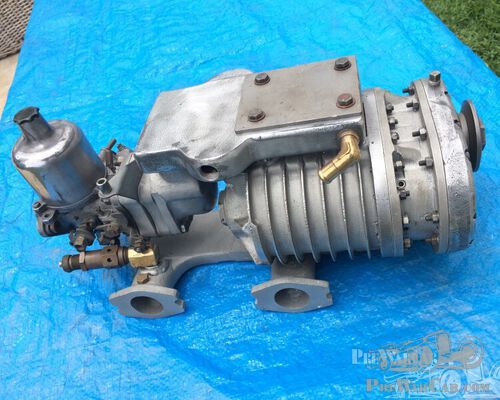
Blower / Compressor / Supercharger - Godfrey Marshall - A Series BMC Engine
SuperchargerA Godfrey Marshall cabin blower Type Mk22 converted to vehicle use by Barry Ekins of Sydney NSW. Ekins created kits for many popula..

BMW 502 V8 3,2L (Barockengel)
6-seater touring sedan, famous from the german television series "Isar 12"Production period: 1955 – 1959, 2,517 unitsV-engine 8 cylin..