The global magazine and marketplace for classic car enthusiasts, by enthusiasts.


Filter
Make a choice:
- Cars
-
Make >>
-
Year >>
-
- Bikes
-
Make >>
-
Year >>
-
-
Location >>
- Parts & more
-
Make of car >>
-
Manufacturer >>
-
Category >>
-
Countries


Hans Compter’s Japanese cars: from a small Subaru to a Prince






At the first major classic car show of the year, InterClassics Maastricht, a country with a centuries-old culture takes centre stage — but also a country whose automotive history began relatively late, and then swiftly caught up. Have you guessed it already? Indeed: Japan — the land of the rising sun.
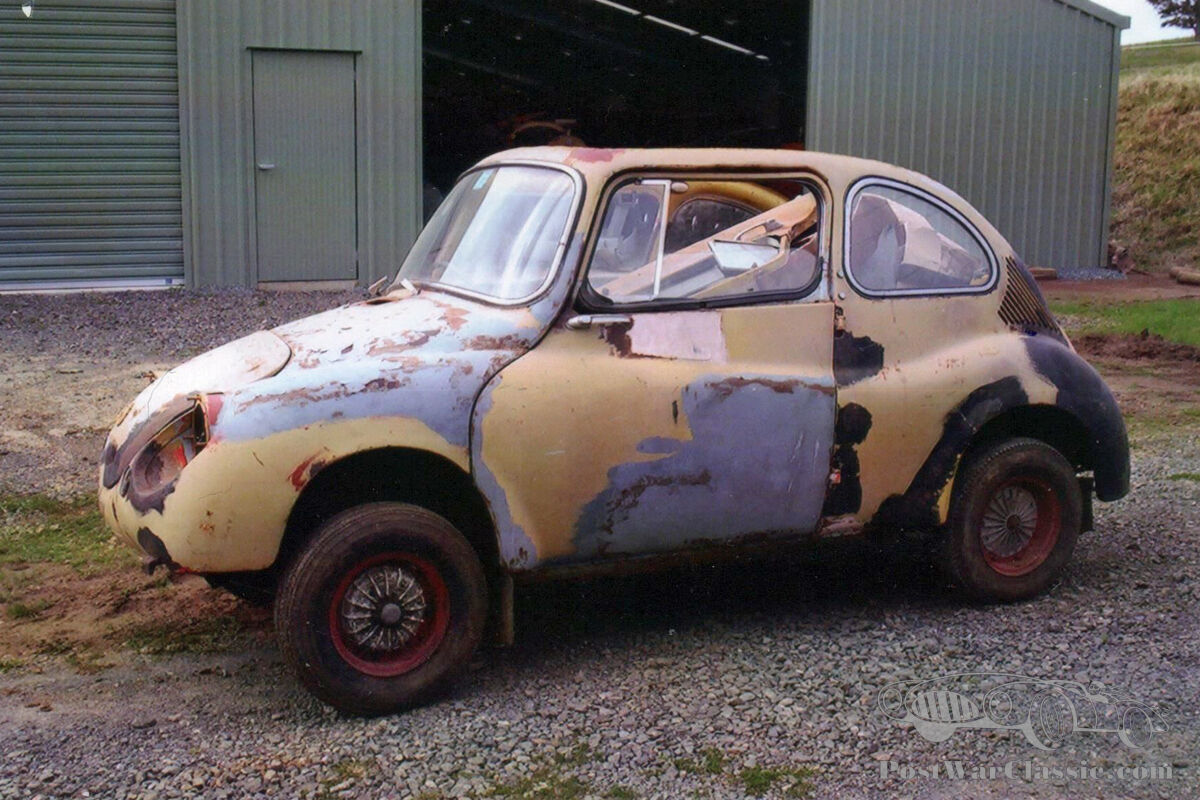
At the PostWarClassic.com stand, we always like to present a car that matches the theme. This year it is a particularly interesting example that you might not immediately expect: a Subaru 360, a model that played an important role in making car ownership more accessible in post-war Japan. The car is owned by Hans Compter, a collector with a passion for unusual, as original as possible vehicles. And besides the Subaru, he turns out to have several other Japanese cars in his collection in New Zealand.
1965 Subaru 360
The Subaru 360 is a small, lightweight Japanese kei car from the late 1950s and 1960s. A kei jidōsha is a special category of ultra-compact vehicles introduced to encourage affordable, economical and city-focused transport.
The Subaru featured a rear-mounted two-cylinder two-stroke engine of 356 cc (just below the 360 cc kei limit), a distinctive rounded “bubble-like” design and offered surprising interior space for its compact size. Thanks to its low weight and simple engineering, it was affordable and efficient to run.
The example shown at InterClassics Maastricht has been in the possession of Hans Compter for more than 35 years and remains in unrestored original condition.
1961 Toyota Publica
In the late 1950s, two senior DAF representatives visited Toyota to discuss the possible use of the Variomatic transmission in a small Toyota. That collaboration ultimately did not materialise: instead, Toyota developed its own small automatic gearbox, the Toyoglide — and that transmission is also fitted to this Publica.
Hans purchased this car in Wagga Wagga (New South Wales, Australia) in the 1980s and drove it to Sydney to have it shipped to New Zealand. The car has now lived “down under” for around forty years.
Suzuki Fronte
The Suzuki Fronte was a Japanese kei car that Suzuki produced from the 1960s as a compact passenger car positioned above the Suzulight models. Like the Subaru 360, the Fronte belonged to the first generation of popular microcars that helped make car ownership in Japan more affordable.
Hans bought his Fronte in New Zealand in the 1990s — most likely from its first owner. An interesting little car with a rear-mounted, transversely positioned three-cylinder engine.
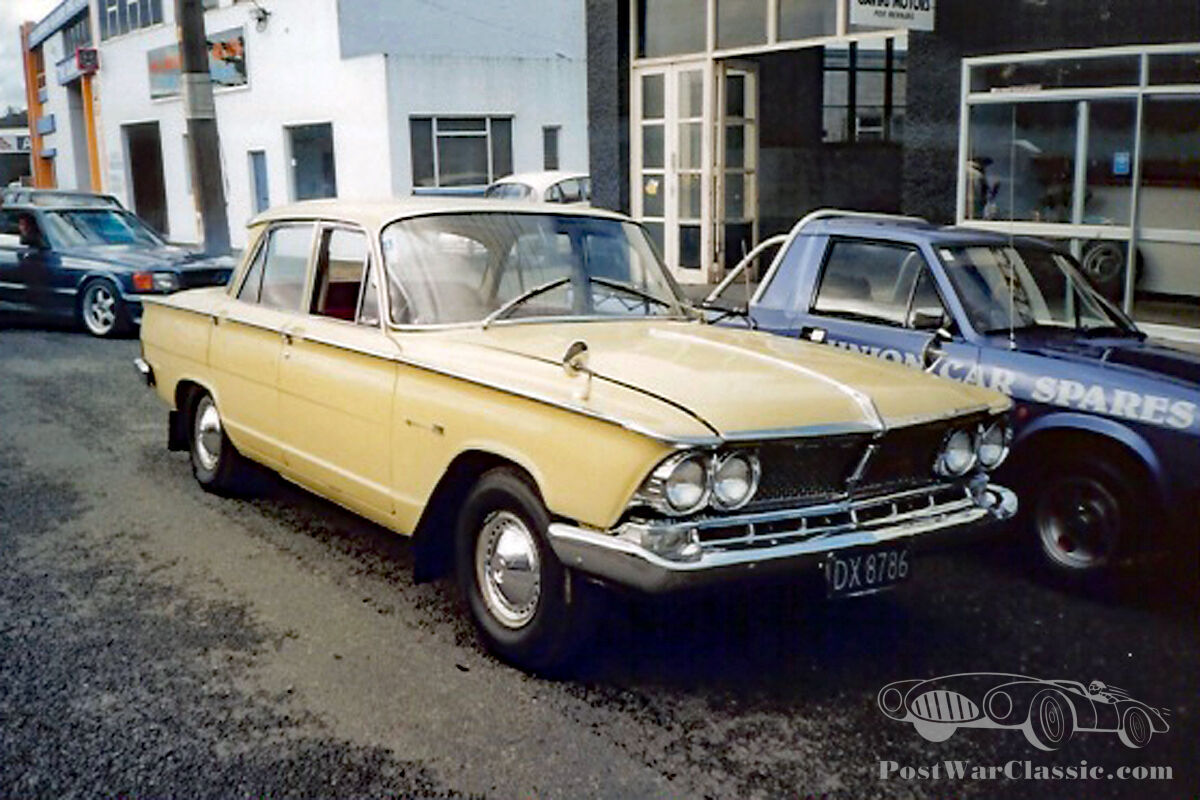
1965 Prince Gloria (S40 series)
According to Hans, one of the most beautifully styled Japanese cars ever built. The Prince Motor Company remained an independent manufacturer until 1966 and was known for refined, technically advanced upper mid-range models.
The S40-series Gloria was produced shortly before the merger with Nissan and was the more luxurious brother of the Skyline. It featured rear-wheel drive and was usually equipped with a 1.9-litre four-cylinder engine (some versions had a six-cylinder). After the merger, the model name continued as the Nissan Gloria.
The photos were taken on the day of purchase in the 1980s on New Zealand’s South Island. Hans then drove the car roughly 1,600 kilometres home to Kauri, in the north of the country.
1965 Honda T500 / TN-series pick-up
Hans also sent us a photograph of his Honda, taken in the 1990s in Queensland (Australia). The T500 / TN-series was a light truck produced from the mid-1960s to the early 1970s — the small commercial-vehicle counterpart that Honda built alongside its early passenger cars. Closely related to the Honda T360, so indeed: a kei truck.
The engine is mounted mid-ships behind the cab and features twin overhead camshafts. This light truck was important for Honda because it demonstrated that the company was capable of building more than just motorcycles.
Other Japanese cars in the collection?
In the 1980s, Hans shipped a Mazda microcar from Sydney to Kauri (New Zealand). Unfortunately, it had stood outside for too long and was sold last year as a restoration project to a Mazda enthusiast.
He also owns a rare Contessa coupé — only two examples of this model were imported into New Zealand. Hans also tells us about a Hino Contessa four-door, which he used for many years as a daily driver before selling it to Perth in Western Australia. He also still has a white Isuzu Bellett, which has stood outside for too long and is now only suitable as a parts car.
Hans continues:
“In the 1960s I also drove an Isuzu Bellel diesel. I used it to tow our trailer and delivered quite a number of classic cars throughout the Netherlands. I still remember how the whole car shook when you turned the key. In the 1990s we also had a 1965 Datsun Bluebird — that is the car my son Dennis Compter learned to drive in. Looking back, I think almost all of the mainstream Japanese brands have passed through our hands.
As for spare parts, there is still a Daihatsu Compagno lying somewhere in the grass on our property — quite rare, but only suitable as a donor car. I doubt anyone in Europe is looking for one… perhaps in Japan?”
Details:
- Event: InterClassics Maastricht
- Theme: Legends of the Rising Sun
- Date: 15 – 18 January 2026
- Location: MECC Maastricht, Netherlands
- Tickets: Click here
Published:
Thursday January 8th, 2026
Facebook
LinkedIn
Twitter
WhatsApp
Email
Copy
Comments
M Hans Compter
12 January, 17:51
Hello Mick, Thanks for your remarks. However you may not have understood that nearly all our Japanese rare cars are not for sale and are in our Family Trust in New Zealand. I consider myself a lucky guy in that I do not need to offer our collection of rare cars to an auctioneer to be sold after my death because I have a son who is also keen to continue with them and two grandsons who already drive around in them on our own roads on our 12 hectare property. But we need to also be realistic and offer some of the unrestored cars which need too much work for my son Dennis Compter for sale. That is why the cute little Subaru can now after 35 years of ownership be bought in Maastricht. It is very rare and is a case of First come First serve.
Read more
Mick
12 January, 07:13
Sadly, too many of these right-hand drive classics end up being shipped to European auction houses at considerable expense, which is ultimately passed on to the buyer. There would be lots of interest 'Down-Under' if they were offered here, but we are left out of the loop. It isn't logical to pay for shipping to Europe, and then back to Australia, New Zealand, or indeed to Japan.
Read more