The global magazine and marketplace for classic car enthusiasts, by enthusiasts.


Filter
Make a choice:
- Cars
-
Make >>
-
Year >>
-
- Bikes
-
Make >>
-
Year >>
-
-
Location >>
- Parts & more
-
Make of car >>
-
Manufacturer >>
-
Category >>
-
Countries


Monumental marketing: the Rialto Bridge R4
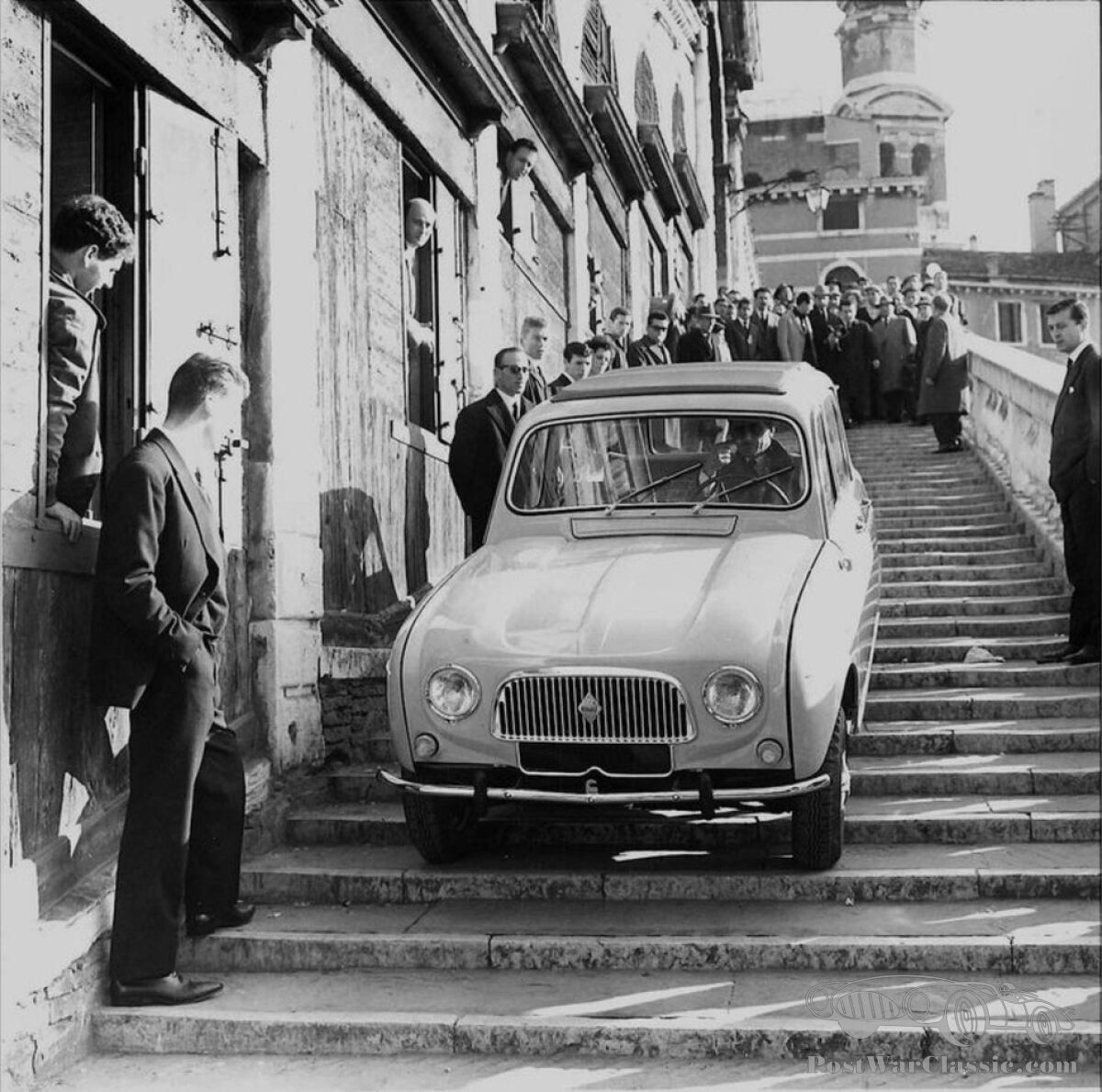
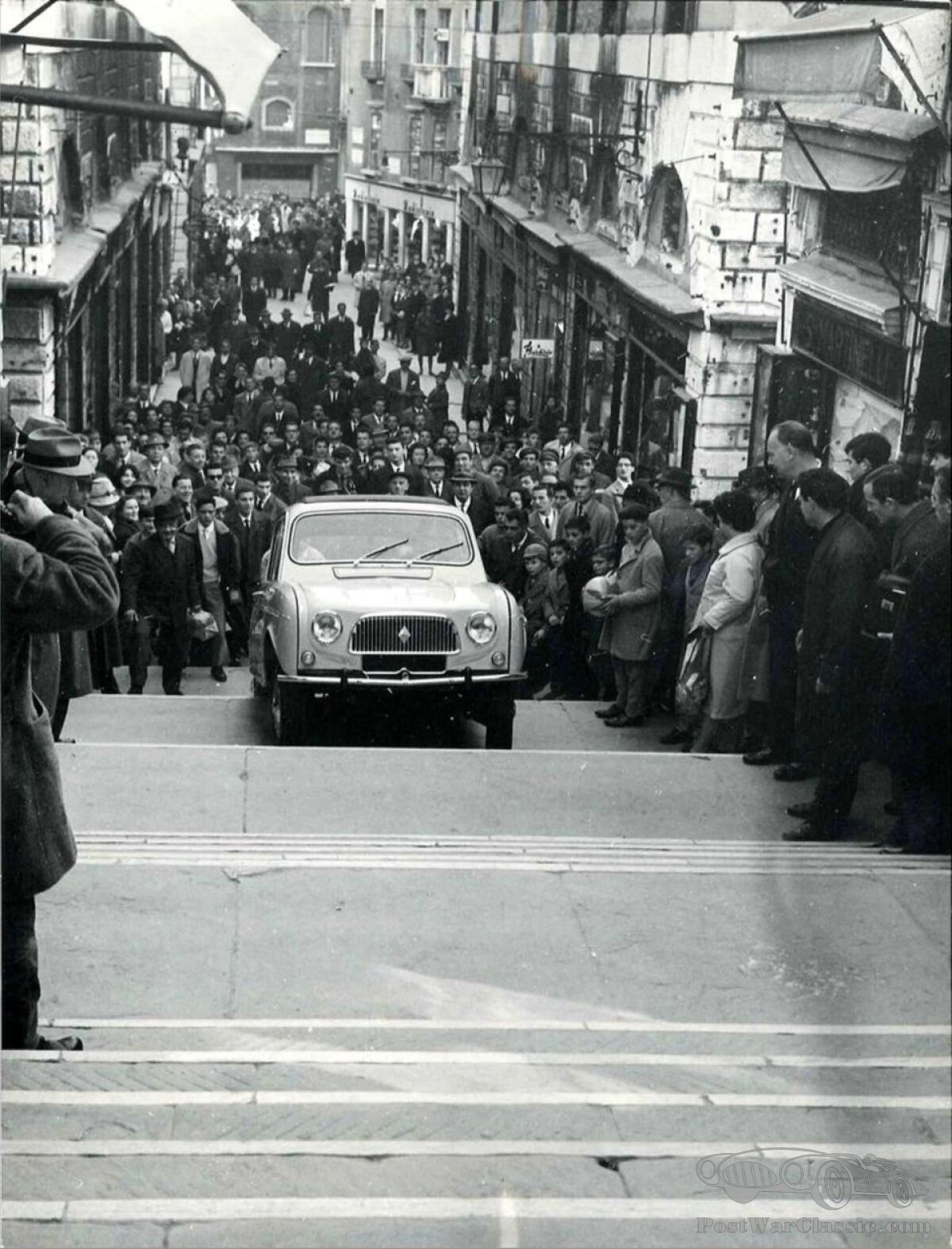


There was a time when no one seemed to care much about climbing on wonders of the world such as Rome’s Colosseum, Athens’ Acropolis or Wiltshire’s Stonehenge. But waves of tourists have changed all that. Climbing, sitting on, or even touching these ancient structures is now often strictly prohibited, with fines running into many hundreds of euros. Venice’s 16th-century stone bridges, the Ponte di Rialto and the Ponte della Paglia, in the heart of the city’s car-free historic centre, belong on that list too. The former was painstakingly restored about 10 years ago after local businessman Renzo Rossi donated €5 million.
Imagine Renault asking today for permission to drive its new Renault 4 up and down the steep steps of these historic bridges, threading its way through Venice’s ultra-narrow streets for a promotional stunt. Unthinkable. Yet back in 1961, the idea did not seem so far-fetched, either to Renault or to the city authorities. The stunt was conceived to demonstrate the brand-new car’s ruggedness and the capabilities of its long-travel, fully independent suspension. The Renault absorbed the bumps with ease, keeping the car remarkably level and comfortable throughout.
Did it work? We suspect it did. Citroën’s 2CV may have opened the market for the no-frills utility car by demonstrating that it could carry a basket of eggs across a ploughed field without breaking them; the Renault 4 made the same point in rather more spectacular fashion. Within five years, one million examples had been sold, particularly in rural France and other parts of the world where roads were less than ideal. We doubt the Rialto Bridge has ever been tackled by a Renault 4 again, though.
Words: Jeroen Booij, Picture: Renault PR
Published:
Friday July 3rd, 2026
Facebook
LinkedIn
Twitter
WhatsApp
Email
Copy