The global magazine and marketplace for classic car enthusiasts, by enthusiasts.


Filter
Make a choice:
- Cars
-
Make >>
-
Year >>
-
- Bikes
-
Make >>
-
Year >>
-
-
Location >>
- Parts & more
-
Make of car >>
-
Manufacturer >>
-
Category >>
-
Countries


Murder and mystery: whatever happened to the Emperor Special?
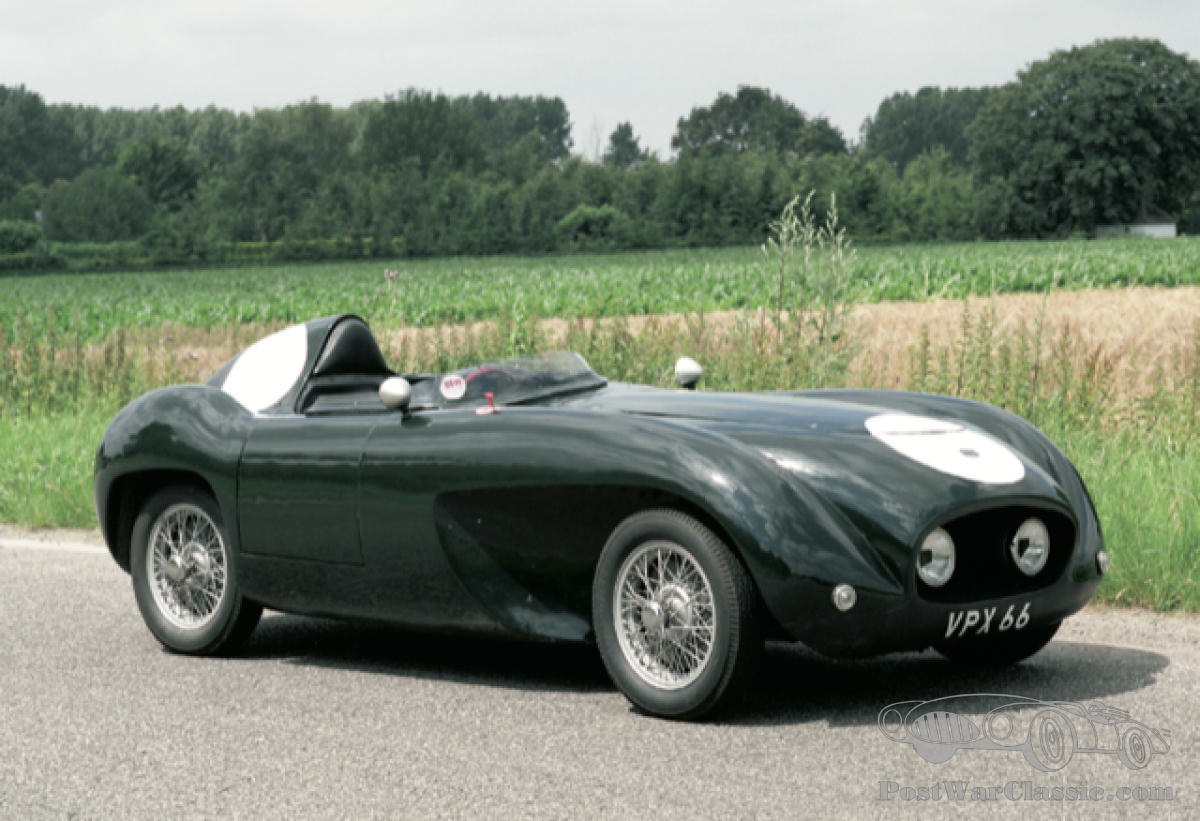
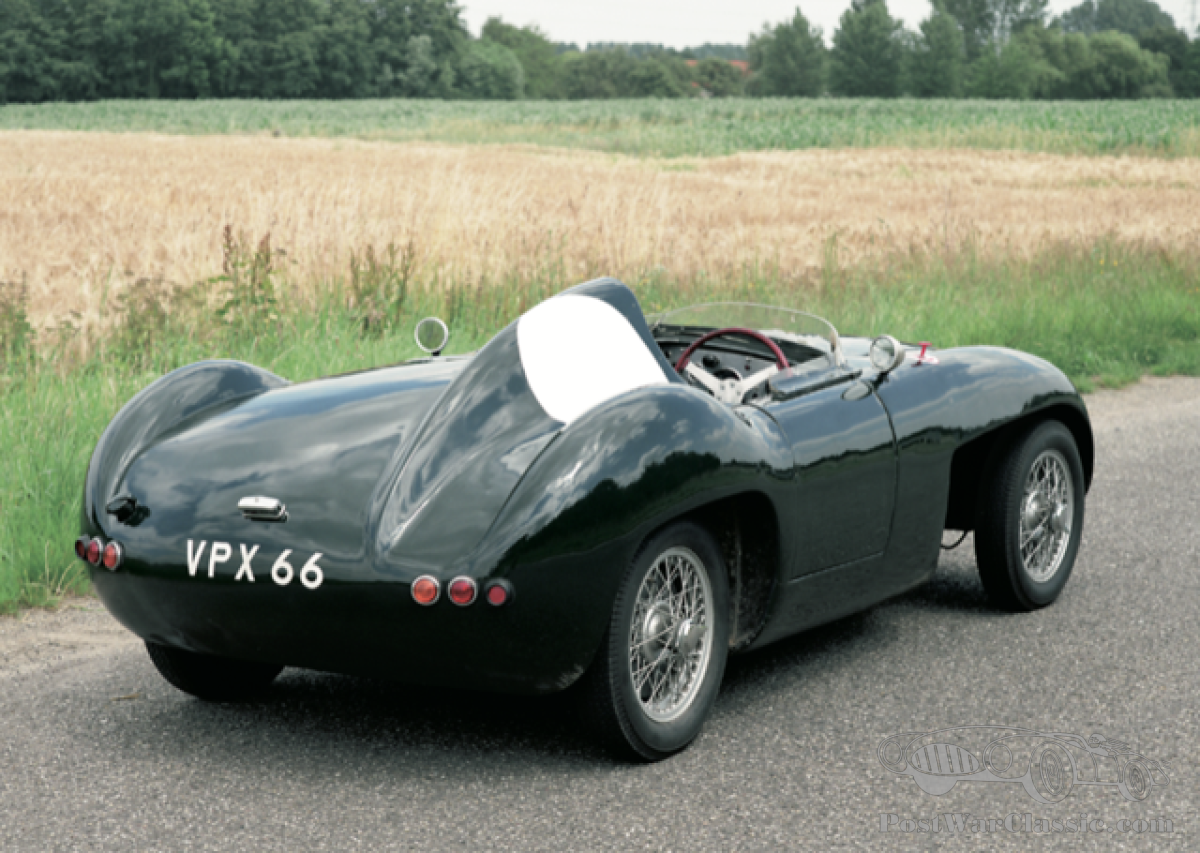


One of the pleasant things about having an archive is that you can be surprised every time you dive into it, trying to find something in particular and then stumbling upon something totally irrelevant but no less interesting. We found the photographs of the pretty HRG seen here and were immediately reminded of a story we wrote back in 2018.
There is some great mystery and intrigue in addition to the triumph and tragedy surrounding this streamlined special, known as the Emperor Special, and formerly registered TPD 168. The dramatis personæ: racer David Blakely and nightclub hostess Ruth Ellis.
From our own writing: ‘Ellis was executed since she shot her fiancé Blakely in public on April 10, 1955. Blakely was the stepson of Sir Humphrey Cook, patron of ERA, and from a well-to-do family. He had a great passion for sports cars and had a special racer built around a new HRG 1500 twin-cam engine, said to be good for 108bhp in road trim. The car was built by a befriended Aston Martin engineer around a tubular space frame chassis mated to Volkswagen front suspension, a De Dion rear end and a full-width aluminium body somewhat reminiscent of a Ferrari Monza. Blakely spent most of his (inheritance) money on the car, much to the displeasure of Ellis. He must have found it worth the investment, though. On its début at the 1954 Boxing Day Meeting at Brands Hatch, Blakely finished a commendable second to the Connaught-engined Lotus Mk. VIII of John Coombs. And he raced it more than once, each race costing him more and more money. His fiancée soon had enough of it. Days before the Easter Race he’d entered the car for, she stood outside a pub in Hampstead waiting for him to come out. When he did so, she took a Smith & Wesson gun from her handbag and fired it six times. He died in the car park.”
The car is said to have been sold without its engine not long after the murder and hanging of Ellis, at the time described as ‘The calmest woman who ever went to the gallows.’ It was seen for sale in 1999 with another engine and registration number, VPX 66. What happened to the car after that, we wondered five years ago. The pictures in our own files date back to 1999 as well, shortly before it was sold and seemingly disappeared. Has there been any traces of it more recently?
Words and archive pictures: Jeroen Booij
Published:
Sunday March 16th, 2025
Facebook
LinkedIn
Twitter
WhatsApp
Email
Copy
Comments
William Mahany
15 March 2025, 13:28
The thing to remember here is that the Emperor was not, and is not considered, an HRG. It may have been called such, and even carried an HRG badge in period or now(?), but it never came from or went anywhere the HRG factory. The engine in it was owned by HRG and was their first attempt at making their own twin-cam engine. The engine was based on the long-stroke Singer-based unit used in their road cars which had a single-cam head. HRG loaned the experimental twin-cam engine to David Blakely, for trying out in his 1949 Le Mans Lightweight HRG that he had acquired from his local garage in Penn, Buckinghamshire. The engine would not fit in a standard-bodied HRG car, the wide-angle head being too wide with all its manifolds, but the Le Mans Lightweight body was ideal for it and his racing ambitions were felt a good place to test it. The garage owner bought all the 1949 Le Mans team cars circa 1950 and kept two. He then sold one to Blakely. He and Blakely then went racing with them which included some of the earliest Goodwood Nine Hour races. Blakely then fitted the twin-cam engine and, later, the same engine ended up in the Emperor. HRG probably knew this but they may not have scanctioned it! By then, they had also started developing another twin-cam engine based on the shorter-stroke Singer SM engine, no doubt using the experience from the first one. This was fitted to their own new, fully independent Twin Cam car model, with disc brakes, of which only four were made. That engine is not the same engine type as the engine in the Emperor. When Blakely was killed, HRG went down in their company Fordson van to swiftly remove the twin-cam engine from the Emperor and take it back. The engine was later sold (I have all the original correspondence on it) and it ended up in a chain-drive Frazer Nash. It was re-united with the 1949 Le Mans Lighteight in the late 1970s, where it remains to this day. I own all the original pattern-making from the long-stroke twin-cam HRG project. I have a twin-cam head, many spare parts and several experimental manifolds. I intend someday to make some more...
Read more
Barry Morse
15 July 2024, 19:28
I've just stumbled across this piece and recollect that in the very early 1960s, I saw a car for sale in Croydon, I think in the driveway of a large house in Addiscombe Road, which I was told was the Emperor Special. However, it was painted red, and I'm convinced it had twin headrests. The general appearance of the body was certainly similar to the car illustrated.
Does this ring a bell?
Read more
Does this ring a bell?
Nicolas Van Frausum
18 October 2023, 20:31
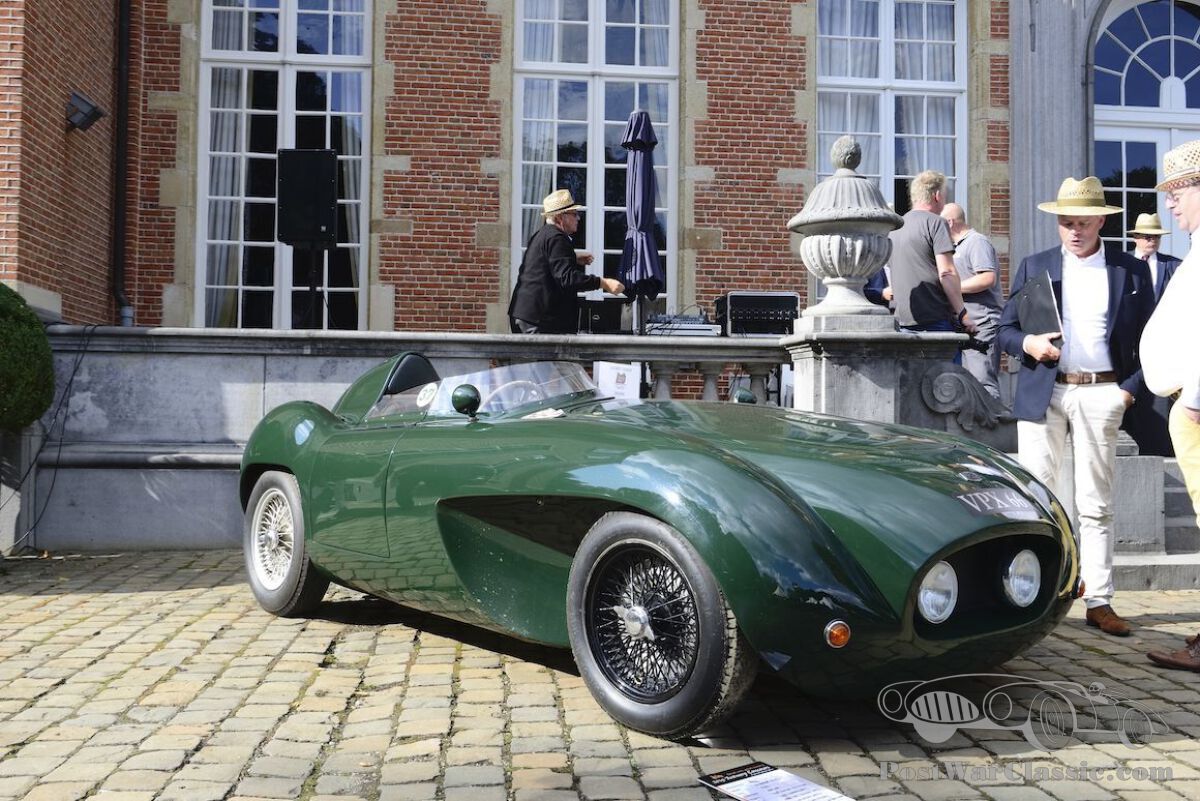
This HRG Emperor has never really disappeared from the radar and has been part of the well-known LMB Collection in Belgium for quite some time now. In recent years, the Emperor has been used in national and international rallies and in 2019 it was a competitor at the 15th Antwerp Concours (see picture attached ) the original aluminium body is hanging in the roof when entering the LMB workshop in Wommelgem near Antwerp.
Read more