The global magazine and marketplace for classic car enthusiasts, by enthusiasts.


The Market; all post-war cars and bikes for sale
Overview of related ads to ad 1976 Alfa Romeo Sports Coupé by Autotecnica del Lario | RM Sotheby's | The Woodcote Park Auction
-

1963 Ferrari 250 GT Lusso | Amelia Island Auctions | Gooding & Co | March 2-3, 2023
An Italian gran turismo of inimitable style, the 250 GT Lusso combined the finest qualities of Pininfarina design and Ferrari performance in one exceptional package. As the last-production 250 GT model, the Lusso was the culmination of a decade of steady chassis development and benefited from a rugged yet compliant suspension, .. -
1969 Porsche 911 T/R | Amelia Island Auctions | Gooding & Co | March 2-3, 2023
When Porsche decided to homologate the 1968 911 for competition purposes, they started with the most minimally equipped model – the 911 T. Production 911 Ts were a full 54 kg lighter than their S brethren, making them an obvious basis for a featherweight racing car. The resulting cars have become known as 911 T/Rs and were built in limited quant.. -
1963 Porsche 356 B Super Coupe | Amelia Island Auctions | Gooding & Co | March 2-3, 2023
The Porsche nameplate has long been synonymous with continuous refinement. This began with their original sports coupe, the 356, which advanced from the “Pre-A” era, through the 356 A, 356 B and, finally, the 356 C. With each year, continual enhancements were introduced. For the 356 B, as presented here, upgrades ranged from the introduction of .. -
1963 Alfa Romeo Giulia Sprint | Amelia Island Auctions | Gooding & Co | March 2-3, 2023
In 1962, Alfa Romeo updated its 101-Series Giulietta Sprint Coupe. While appearing nearly identical to its predecessor, the new model was rebadged “Giulia” and received a number of improvements. A redesigned dashboard incorporated revamped heating controls and the car featured a three-spoke Bakelite steering wheel and vinyl-covered door panels. .. -
1964 Casalini David Motofurgoni | Amelia Island Auctions | Gooding & Co | March 2-3, 2023
The Piacenza Company was founded in 1939 and first started producing pasta-making machines before it transitioned to motorcycles and eventually three-wheeled utility vehicles. Sold under the Casalini sub-brand, the David 49 cc scooter was introduced in 1954 and featured clever engineering, such as bodywork that hinged from the front, revealing t.. -
1965 Porsche 356 C Coupe | Amelia Island Auctions | Gooding & Co | March 2-3, 2023
Introduced in 1948, the 356 was improved upon throughout its production until 1965, when it was replaced by the all-new 911. Unveiled at the 1963 Frankfurt Motor Show, the final 356 C series incorporated several significant changes, most notably four-wheel disc brakes. According to a copy of the Porsche Kardex, this 356 C Coupe was comp.. -
1966 Alfa Romeo Giulia Sprint GT Veloce | Amelia Island Auctions | Gooding & Co | March 2-3, 2023
Launched in 1963, the Alfa Romeo Giulia Sprint GT was designed by Giorgetto Giugiaro for Bertone. The well-proportioned 2+2 coupe carried a distinctive scalino – or “stepnose” – front end where the hood’s leading edge sat above the nose. Largely borrowed from the 105-series sedan, underpinnings included a 1.6-liter, DOHC engine, taut chassis, in.. -
1964 Lancia Flavia 1.8 Coupe | Amelia Island Auctions | Gooding & Co | March 2-3, 2023
Introduced to the world at the Torino Motor Show in 1960, the Flavia was the first new Lancia developed under technical director Ing. Prof. Antonio Fessia. Representing a bold new direction in engineering philosophy, the Flavia utilized a flat four-cylinder engine, front-wheel drive, and four-wheel disc brakes – all technically advanced features.. -
1953 Alfa Romeo 1900C Sprint | Amelia Island Auctions | Gooding & Co | March 2-3, 2023
Presented at the 1950 Paris Motor Show, the Alfa Romeo 1900 was designed by Orazio Satta, a one-time understudy to 1930s Grand Prix engineer Wilfredo Ricart. The marque’s first assembly line-built model, the 1900 utilized unitary construction that specifically allowed coachbuilders to re-body it. Advertised as “the family car that wins races,” t.. -
1968 Mercedes-Benz 600 SWB | Amelia Island Auctions | Gooding & Co | March 2-3, 2023
The magnificent Mercedes-Benz W100 Series 600 was one of the most prestigious and expensive luxury cars on the world stage in its day, and is among the most formal and opulent models ever offered by the lauded company. Brimming with creature comforts, and designed on a truly grand scale, the imposing 600 was Mercedes-Benz’s exclusive flagship fr..


Featured
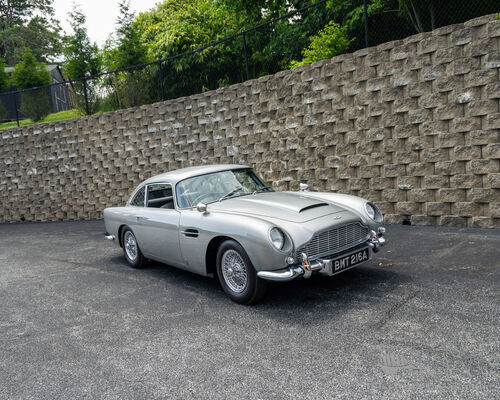
2020 Aston Martin DB5 Goldfinger Continuation | RM Sotheby's | The Monterey Auction
To Be OFFERED AT AUCTION at RM Sothebys' The Monterey Auction event, 13 - 15 August 2026. $1,000,000 - $1,500,000 USD One of 25 examples co..
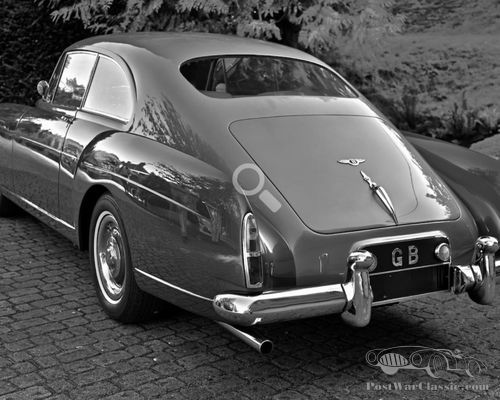
1957 Bentley S1 Fastback by H.J. Mulliner.
1957 Bentley S1 Fastback by H.J. Mulliner.A freshly restored award winning car in like new condition. A later car with Power assited steerin..
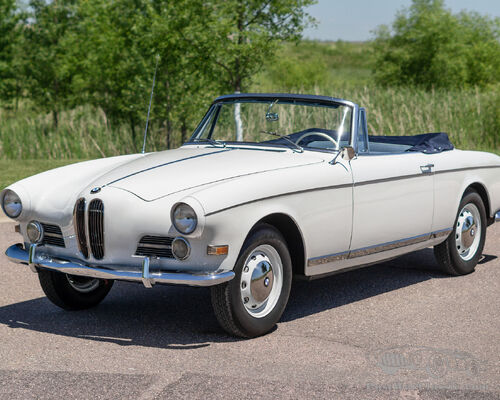
1957 BMW 503 Cabriolet (V8) 1 of 13 Built for US Market #Matching Example
1957 BMW 503 Cabriolet Series 1 Original Aluminum V8 # Matching Original Aluminum Body with Factory Stampings 1 of ..